

PKWY Dental Specialist Practice
9 Scotts Road #12-02 Pacific Plaza
Singapore 228210
| Tel | : | +65 6836 9808 |
| : | services@pkwydental.com.sg |
9 Scotts Road #12-02 Pacific Plaza
Singapore 228210
| Tel | : | +65 6836 9808 |
| : | services@pkwydental.com.sg |
When Might a Root Canal Need Retreatment?
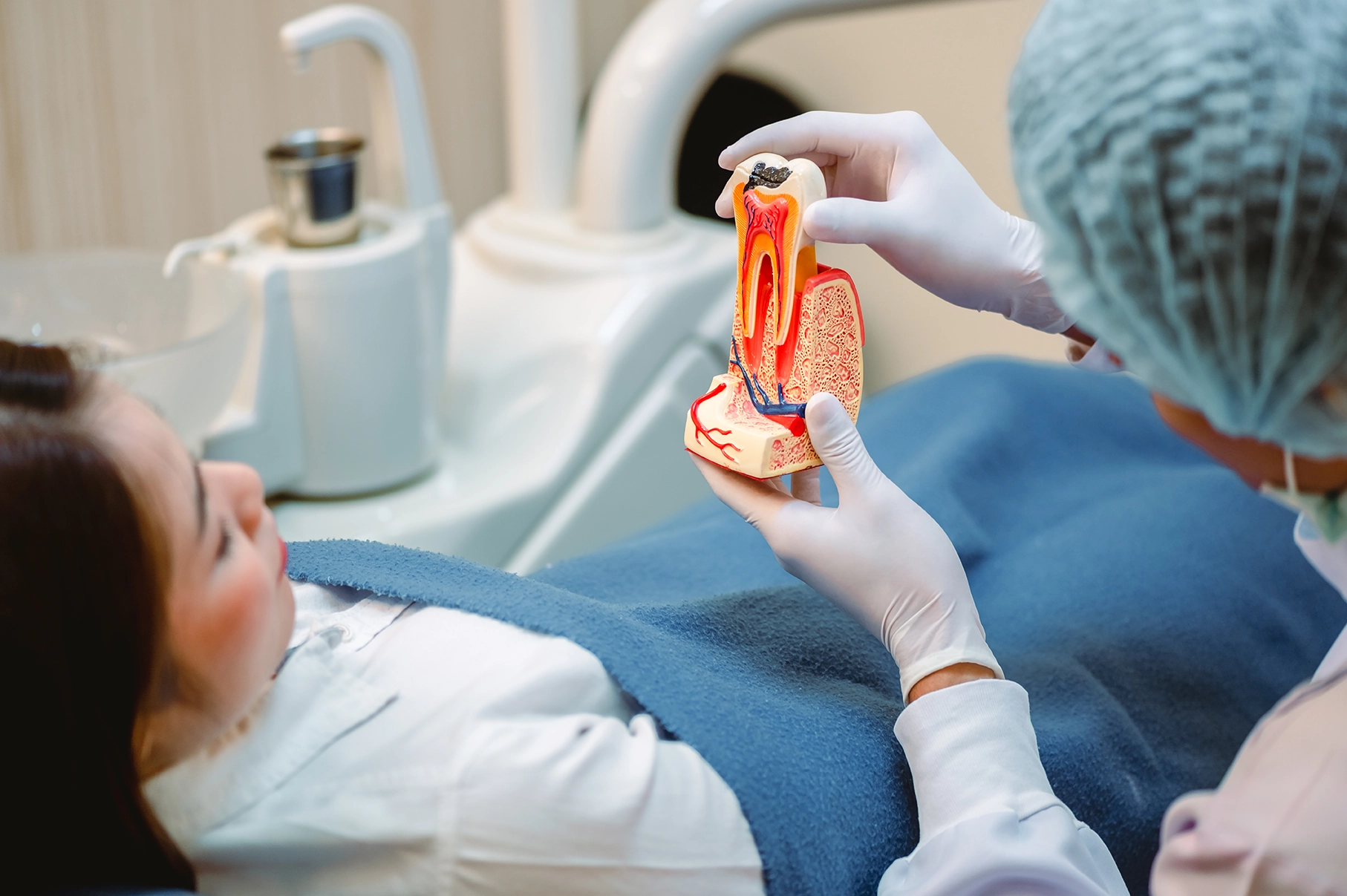
Root canal treatment is intended to remove infection from inside a tooth and allow it to remain functional. In many cases, the treated tooth continues to serve well for years. However, a previous root canal does not make the tooth immune to future problems.
Sometimes, part of the original infection persists because the internal anatomy of the tooth was difficult to treat. In other cases, the tooth initially heals but develops a new problem later. This does not automatically mean that the tooth needs to be removed or that another root canal is the right next step.
Root canal retreatment involves treating a tooth that has already undergone root canal therapy. Whether it is appropriate depends on what has happened to the tooth since the original treatment and whether the tooth can still be preserved.
Root canal treatment cleans and seals the internal canal system of a tooth. For the tooth to remain healthy afterwards, infection needs to resolve and the treated area needs to stay protected from bacteria. A problem can therefore arise when something was difficult to address during the original procedure or when the tooth becomes compromised later.
Root canals can be narrow, curved or unusually shaped. Some teeth also have additional canals that are difficult to identify.
If bacteria remain in an area that could not be fully cleaned or sealed, the tooth may not heal as expected.
A tooth that initially healed can still develop a new issue. New decay may allow bacteria to enter again, while a loose or damaged crown or filling can weaken the seal protecting the tooth.
A crack may also create another route for bacteria. The key point is that a tooth needing further care has not necessarily been problematic since its first root canal.
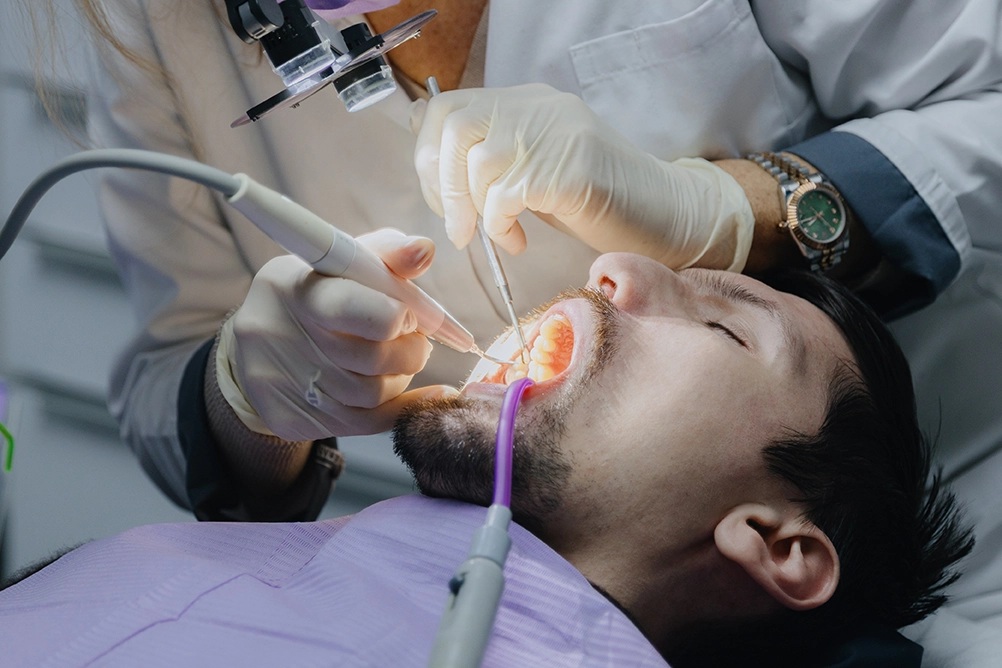
Renewed pain or swelling may prompt reassessment, but symptoms alone do not show exactly what is wrong. The aim is to identify the cause and determine whether the tooth is still suitable for further treatment.
The dentist may look at when the original root canal was carried out and how the tooth behaved afterwards.
A tooth that never settled may suggest a different issue from one that remained comfortable for years before symptoms returned.
The dentist will also check whether the problem appears to come from the treated tooth or another nearby structure.
Dental X-rays can show the previous root canal filling and the tissues around the roots. In more complex cases, CBCT imaging may provide a three-dimensional view that helps reveal missed canals, bone changes or other features that are harder to see on a standard X-ray.
Finding infection does not automatically mean retreatment should go ahead. The dentist also considers whether enough healthy tooth structure remains to support a lasting restoration.
A major crack or extensive damage may reduce the likelihood that the tooth can be preserved successfully. This broader assessment helps determine whether further treatment is worthwhile.
Once the cause and condition of the tooth have been evaluated, the dentist can consider which approach is suited to the findings. Retreatment is one possibility, but it is not automatically chosen whenever a root canal-treated tooth develops another problem.
| Option | When It May Be Considered |
|---|---|
| Root canal retreatment | When the underlying problem may be corrected by reopening and treating the canal system again. |
| Endodontic surgery | When the problem is better approached from around the root rather than through the tooth. |
| Extraction | When the tooth is too damaged or cannot reasonably be restored and preserved. |
Retreatment reopens the tooth so the previous filling material can be removed. The canals can then be checked, cleaned and resealed.
This may allow untreated anatomy or persistent contamination to be addressed. Existing crowns or posts, however, can make access more complex than during the first procedure.
Sometimes the problem is better approached from around the root instead of through the canal system. An apicoectomy is one example.
It treats the root tip and surrounding affected tissue and may be considered when conventional retreatment is unsuitable or unlikely to reach the problem effectively.
The decision between retreatment and extraction depends on whether the tooth can still be restored and function reliably. If too little healthy tooth structure remains or there is an unfavourable fracture, extraction may be considered instead.
If a tooth that has already undergone root canal treatment starts causing problems again, an assessment can help identify what has changed and whether further treatment may preserve it.
At PKWY Dental Specialist Practice, patients with concerns about a previously treated tooth can receive assessment and endodontic care where appropriate.
Dr Michele Chia has a special interest in endodontics and holds a Master of Clinical Dentistry in Endodontology with Distinction. Her practice includes the management of infected root canals and previously treated teeth.
If you have persistent symptoms or have been told that a previous root canal may need further attention, contact us to book an assessment and discuss the available options.
Sometimes. If the crown is still suitable, the dentist may be able to access the canals through it. In other cases, the crown or other restorative material may need to be removed first.
Sometimes, but this depends on the tooth’s condition and previous treatment. The dentist will assess whether another retreatment is feasible and whether it could still help preserve the tooth.
Follow your dentist’s aftercare advice and avoid heavy chewing on the treated tooth while it is still temporarily restored or until your dentist advises that normal chewing can resume.
A successfully retreated and properly restored tooth can continue to function normally. Long-term results vary, so regular dental care remains important for protecting the tooth and its restoration.

Dr Michele Chia
General Dentist (Special interest in Endodontics)
Dr Michele Chia’s practice centres on endodontics. She focuses on diagnosing and treating tooth pulp infections, performing root canal procedures and managing complex cases such as persistent infections and cracked teeth. Using microscopic endodontic and microsurgical techniques, she combines technical precision with a patient-centred approach, ensuring individuals understand their treatment and the importance of timely care for long-term oral health.
Dr Chia also has a strong interest in the management of traumatic dental injuries. During her Endodontics Postgraduate Residency Training Program, she served on the dental trauma service team at King’s College Hospital, where she provided emergency care along with long-term follow-up and rehabilitation for patients recovering from dental trauma. This experience allows her to support individuals through both urgent situations and their ongoing recovery with clarity, reassurance and comprehensive care.


