

PKWY Dental Specialist Practice
9 Scotts Road #12-02 Pacific Plaza
Singapore 228210
| Tel | : | +65 6836 9808 |
| : | services@pkwydental.com.sg |
9 Scotts Road #12-02 Pacific Plaza
Singapore 228210
| Tel | : | +65 6836 9808 |
| : | services@pkwydental.com.sg |
Clear Aligners for Adults: How Treatment Is Customised for Complex Cases
Dr Lawrence Yong
Dental Specialist in Orthodontics (Specialist in Braces)
Clear aligners are often associated with straightforward tooth straightening, but adult orthodontic treatment can sometimes require more detailed planning. The challenge is not always obvious from how crowded or uneven the teeth appear.
For some adults, the starting condition of the teeth can affect which movements are possible and how treatment should be approached. Understanding these considerations can help explain why some clear aligner cases require more detailed orthodontic planning.
Adult orthodontic treatment does not necessarily become more complex simply because of age. Complexity can instead depend on factors that affect how individual teeth can be moved and how much control treatment requires.
Adults considering clear aligners such as Invisalign may already have dental restorations that need to be taken into account. A crown placed on a natural tooth may be able to move with the tooth beneath it, while a dental implant is fixed to the jawbone and cannot be repositioned orthodontically. Bridges can also affect planning because connected teeth may not be movable as separate units.
Previous orthodontic treatment can introduce different considerations. Teeth may have shifted after earlier braces or clear aligner treatment, so further treatment needs to be planned around their current positions and bite rather than simply repeating the earlier approach.
The visible amount of crowding does not always indicate how technically demanding treatment will be. Greater control may be needed when:
The orthodontist will assess whether the required movements can be achieved predictably with clear aligners before developing the detailed treatment sequence.
When clear aligners are considered suitable, treatment can be designed around the movements required for that particular case. The digital plan provides a way to map these changes, but the orthodontist determines how the teeth should progress from their starting positions towards the intended result.
Not every tooth needs to move at the same time. In some cases, space has to be created before a crowded tooth can move into position. A tooth may also need to remain relatively stable while movement takes place elsewhere in the arch.
The aligner sequence can therefore be planned so that movement occurs progressively rather than attempting to make every correction at once.
Clear aligners may be combined with additional orthodontic techniques depending on the movements or space required. These may include:
A treatment plan represents how the teeth are expected to move, but orthodontic movement does not always follow that prediction exactly. Follow-up appointments allow actual progress to be compared with the planned sequence so that differences can be identified before they affect later stages of treatment.
During treatment, the orthodontist can assess whether each aligner is fitting as expected and whether the planned tooth movement is occurring. A tooth may sometimes move more slowly than anticipated or fail to reach its intended position at a particular stage.
Individual teeth can respond differently to orthodontic forces because factors such as root shape or surrounding bone can affect how readily they move. Wearing the aligners for the recommended amount of time is also important, as insufficient wear can affect whether the planned movement occurs as expected.
If the teeth have not reached the positions expected at a particular stage, the orthodontist may take another scan and develop a revised series of aligners. These additional stages are often referred to as refinements.
A refinement does not simply repeat the original treatment. It uses the positions the teeth have actually reached as the new starting point, allowing the remaining movements to be replanned.
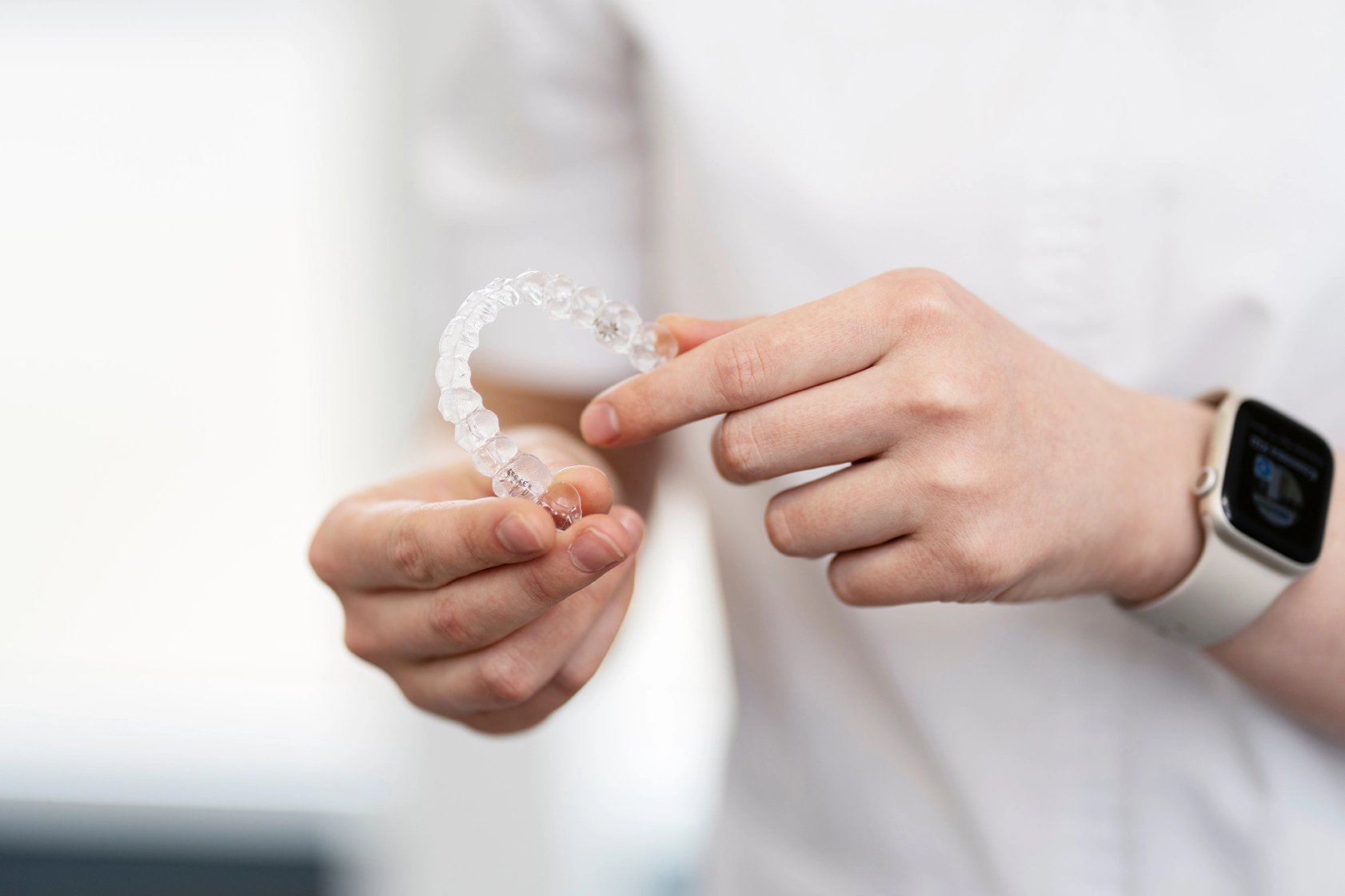
Having more complex orthodontic needs does not necessarily mean that clear aligners are unsuitable. What matters is whether they can provide the level of control needed to achieve a clinically appropriate result in your case. A specialist assessment can help you understand where clear aligners may fit into your treatment options, including any limitations that should be considered before you decide how to proceed.
At PKWY Dental Specialist Practice, adults considering clear aligners can receive an orthodontic assessment to understand the treatment options available for their needs. Dr Lawrence Yong is a dental specialist in orthodontics with experience in clear aligner treatment and is an Invisalign Diamond Provider. If you are considering clear aligners for a less straightforward orthodontic concern, schedule an appointment to discuss how treatment could be approached.
Read more from Dr Lawrence Yong through his media features and contributions:
Not necessarily. Treatment length varies according to the amount of correction required and how the teeth respond over time. Two cases described as complex may therefore have quite different treatment timelines. The expected duration can be estimated more accurately once the orthodontic plan has been developed.
Review intervals can vary depending on the treatment stage and how the teeth are responding. Some patients may need closer follow-up at particular points, especially when more controlled movements are being attempted. The review schedule is usually planned according to the needs of the individual case.
In many cases, routine dental care can continue while clear aligner treatment is underway. If more significant dental work is needed, its timing may need to be coordinated with the orthodontic plan so that changes to tooth shape or position do not interfere with aligner fit.
Dr Lawrence Yong
Dental Specialist in Orthodontics (Specialist in Braces)
Dr Lawrence Yong is an orthodontic specialist with 30+ years of experience treating a wide range of orthodontic conditions in Singapore. His background spans the public, corporate and private sectors, giving him extensive exposure to both routine and complex cases. He is skilled in fixed appliance systems and clear aligner therapy and has been an early adopter of digital orthodontic workflows.
Beyond clinical care, Dr Yong is well regarded for mentoring dentists in the region and has lectured internationally on developments in orthodontics and digital treatment planning. He also previously served as the President of the Singapore Dental Association. Known for his thoughtful approach to treatment planning, he focuses on guiding patients through their orthodontic journey with clear communication and steady, consistent support.


